Bolivia has no coastline, no ocean, and no naval battles to fight — and yet it maintains a navy of roughly 5,000 personnel, with bases, vessels, officers, and a national Day of the Sea. Sailors in white uniforms patrol a lake more than two miles above sea level, in the thin air of the Andes, as part of one of the world's strangest and most moving institutions: a navy that exists to keep a lost coastline alive in the national memory. This is a research-based explainer, drawn from the sources below.
Bolivia was not always landlocked. At independence in 1825 it had a Pacific coastline along the Atacama region — about 250 miles of it, economically important despite the desert. Then came the War of the Pacific (1879–1883), in which Chile defeated Bolivia and Peru and conquered Bolivia's entire coastal territory, the Litoral Department. A 1904 treaty made the landlocked status official: Chile kept the coastline, and Bolivia received guarantees of trade access and transit through Chilean ports. More than 140 years later, Bolivia has never reconciled itself to the loss. Officials still describe it as a historical injustice, and Bolivians mark it every year.
The modern force dates to January 1963, when Bolivia established a River and Lake Force under the Ministry of National Defense — the Armada Boliviana. It is not a ceremonial club: it has around 5,000 personnel and roughly 173 vessels, and it patrols some 5,000 miles of navigable rivers plus Lake Titicaca, the highest navigable lake in the world at 12,507 feet, which Bolivia shares with Peru. The work is practical — intercepting smugglers, delivering supplies to remote rural communities, and rescuing people and livestock during floods — but its purpose is also symbolic. The navy exists, in the words of its own history, to cultivate a maritime consciousness: to keep alive the hope of recovering sovereign access to the sea.
Every year on March 23, Bolivia observes Día del Mar, the Day of the Sea, with parades and ceremonies in which the country re-vindicates its claim to sovereign access to the Pacific. Schoolchildren learn the geography of a coastline most of them will never see. Recruits join a navy whose ships may never reach salt water. The claim has been pursued diplomatically for generations: in 2013 Bolivia took its case to the International Court of Justice, asking the court to order Chile to negotiate; the court ultimately did not give Bolivia what it asked for, and the two countries' full diplomatic relations remain broken. The navy sails on regardless — a floating refusal to treat the loss as final.
The practical cost of landlocked life is real. Bolivia sends roughly two-thirds of its trade through Chilean ports under the transit guarantees of the 1904 treaty — access, but on someone else's terms, with fees and delays it cannot control. Neighbouring Peru has offered gestures of its own: a small strip of beach for symbolic use in 1992, and a later agreement allowing Bolivia to build dock facilities and a naval-school annex on the Peruvian coast. None of it is sovereign coastline. None of it has ended the claim, either — which is why the Day of the Sea, and the navy behind it, are still going strong after more than a century.
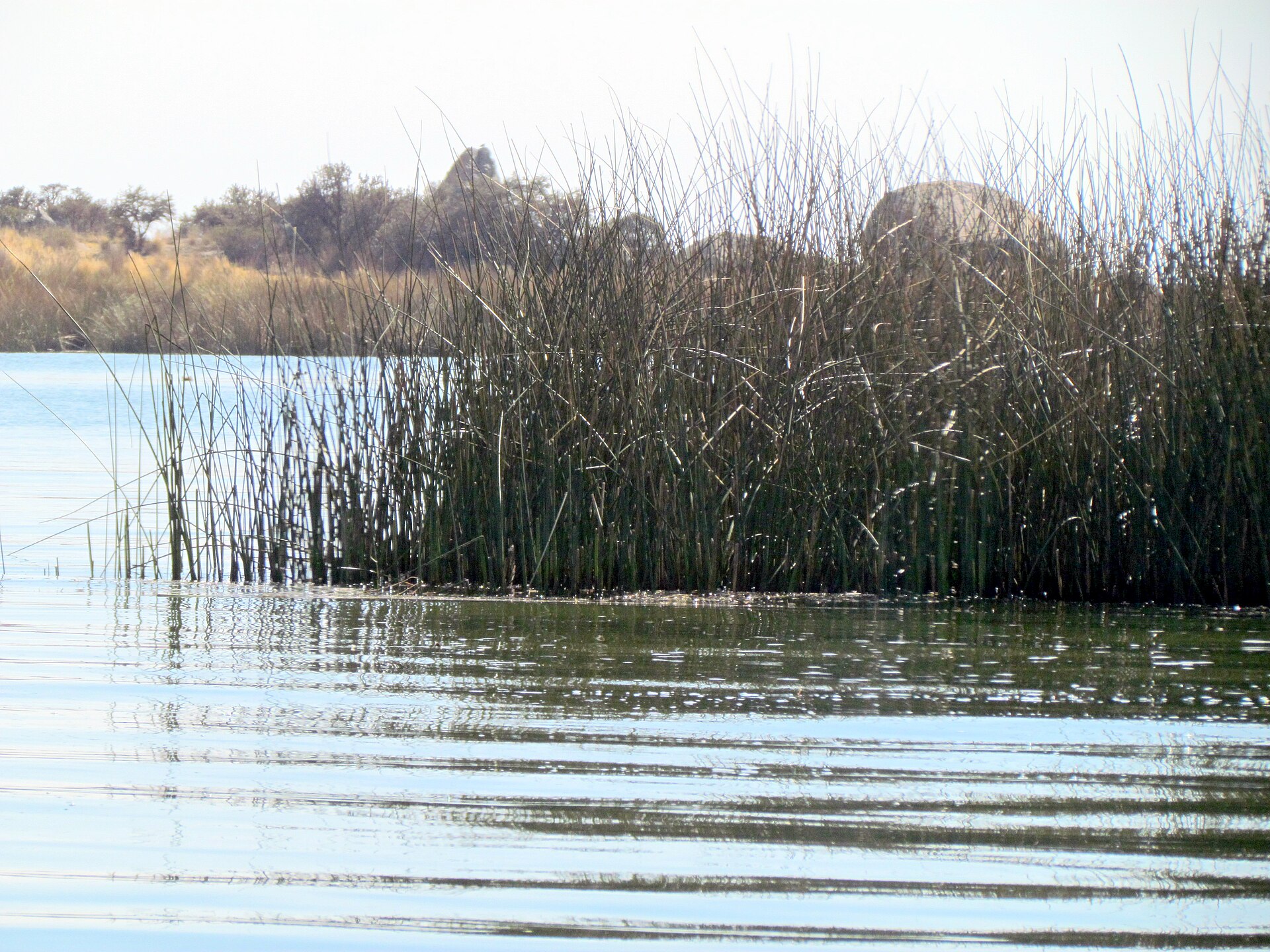
Lake Titicaca has drawn stranger visitors than sailors. The French oceanographer Jacques Cousteau once scuba-dived in its cold, high-altitude waters hunting for Inca treasure — one of those details that sounds invented and is not. He found no lost empire, but the story fits the lake's reputation: a vast inland sea, 3,200 square miles of it, behaving in every way except location like an ocean. Bolivia's sailors train on it, its reed boats and patrol craft cross it, and its naval base at San Pedro de Tiquina watches over a strait connecting its two basins. If you ever visit Copacabana or San Pedro de Tiquina, you can see the fleet for yourself — white uniforms, high altitude, and a navy that refuses to believe geography is destiny.
Bolivia's navy is easy to laugh at until you see what it is for. Borders are drawn by wars, but nations are kept alive by memory — and sometimes memory wears a uniform, sails a lake two miles up, and waits, patiently and publicly, for a sea that may never come back.
Related on Poptani Labs: Why the US dollar is so important to the world, The canal that runs on rain: how drought squeezed world trade, Four Indian places that look almost unreal. More in this category: The World, Explained.
Sources: Wikipedia, Bolivian Navy; Fodor's, why landlocked Bolivia has a navy; GeoGarage, Bolivia is landlocked — don't tell that to its navy

