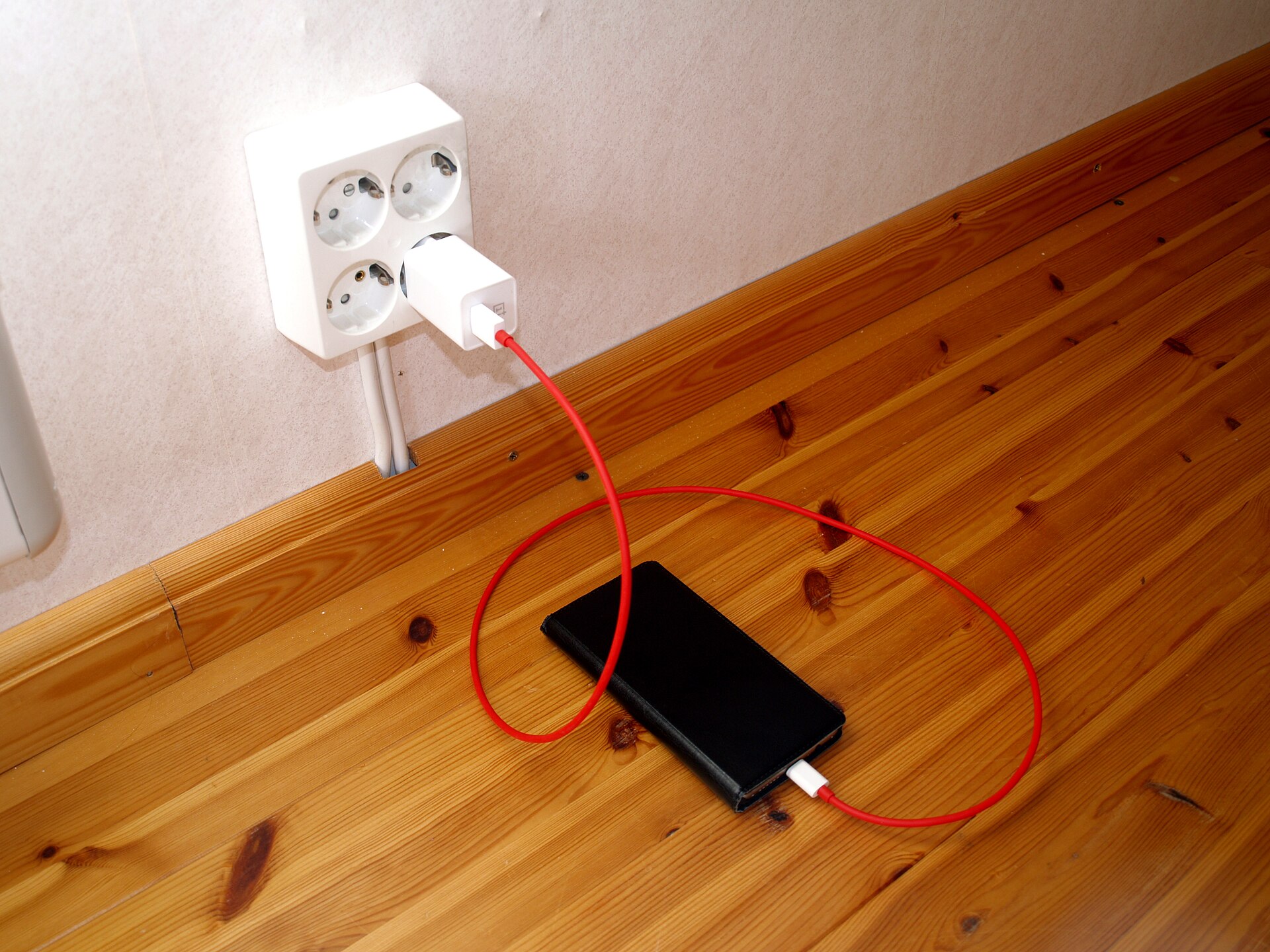
This is a research-based guide, compiled from manufacturer pages and battery research — no lab tests, no phones harmed. The good news first: you do not need to baby your phone. Modern batteries are managed by software that does most of the worrying for you. But a few habits, all confirmed by the people who make the phones, genuinely slow down the slow fade that turns a two-year-old phone into a device that dies by dinner. The rules are simple, and they all come down to two enemies: heat, and time spent sitting at 100%.
A lithium-ion battery is happiest in the middle of its charge. Battery University, the long-running reference on battery chemistry, explains that a cell kept at high voltage and high temperature degrades fastest — "the worst situation is keeping a fully charged battery at elevated temperatures." Charging to 100% and leaving it there, especially somewhere warm, is the fastest way to age a battery. The widely quoted guideline is to keep the charge roughly between 20% and 80% when you can, and not to stress about the odd full charge. There is no memory effect to worry about — lithium-ion batteries do not need to be fully drained before charging, and partial top-ups are fine. What matters is avoiding the extremes: deep discharges to 0% and long stretches pinned at 100%.
If you remember one thing, make it this: heat damages batteries permanently. Apple puts the ideal comfort zone at 16–22 °C and warns against exposing a device to ambient temperatures above 35 °C, "which can permanently damage battery capacity" — charging in high heat can damage it further, and the phone's software may limit charging above 80% when it gets hot. So charge in the shade, not on a sunny windowsill or a car dashboard. If your phone gets warm while charging in a case, take it out of the case. And for the phone in a drawer, store it at around 50% charge, powered down, somewhere cool — a battery left flat for months can fall so low it will not charge again, and one left full in a hot drawer ages fast.
All three big makers now build the 20–80% idea into the phone itself. On iPhone, Optimised Battery Charging delays charging past 80% when it predicts a long charge, and iPhone 15 and later let you set a hard charge limit between 80% and 100% in 5% steps; those models are designed to retain 80% capacity after 1,000 full cycles, against 500 for earlier iPhones. Google's Pixel offers Adaptive Charging, which finishes charging just before you typically unplug, and a Limit to 80% mode. Samsung's Galaxy phones have Battery Protection with three modes: Basic, Adaptive, and Maximum, which stops at 80% — on newer software you can choose 80, 85, 90 or 95%. All three need about two weeks to learn your routine before they kick in. If you charge overnight, turn one of these on and stop thinking about it.
Fast charging sounds like it should be brutal on a battery, but the evidence is reassuring. A two-year test by YouTuber HTX Studio, running phones through 500 charge cycles and reported by several tech outlets, found fast charging cost only about 0.5% extra capacity loss on iPhones and about 0.3% on Android — and charging only between 30% and 80% cut capacity loss by roughly 4% on iPhone and 2.5% on Android. Treat that as one YouTuber's test, not peer-reviewed science, but the direction matches the chemistry: heat and time at 100% matter far more than wattage. A cool fast charge beats a hot slow one. The practical upshot: use the fast charger when you need it, the slow one overnight, and do not lose sleep over either. And remember what "80% health" means: all three makers treat about 80% of original capacity as the point where a battery is due for replacement.
All of this guidance exists because, in 2016, the world watched what happens when battery safety fails at scale. Samsung's Galaxy Note 7 launched on 2 August 2016, and within weeks phones were catching fire while charging. Samsung confirmed 35 cases globally by 1 September and recalled about 2.5 million phones. The US regulator's formal recall covered about 1 million phones, with 92 reports of overheating including 26 burns. Then the replacement phones started catching fire too — one began smoking on a Southwest Airlines flight in Louisville on 5 October, and the plane was evacuated before take-off. Samsung permanently ended production on 11 October, and the expanded recall eventually covered about 1.9 million phones in the US. In January 2017, Samsung announced the cause: two different battery defects from two suppliers — a design flaw in one maker's cells, welding defects and missing insulation tape in the other's — after testing some 200,000 phones and 30,000 batteries with independent firms. The estimated loss was around $6 billion. Your phone will not do this. But the Note 7 is why your phone now stops charging when it gets hot, and why the 80% limit exists at all.
Tonight, do three things: switch on your phone's charge limit or optimised charging, move the charger off the sunny windowsill, and stop draining the battery to zero before plugging in. That is the whole programme. Batteries are consumables — yours will fade eventually, whatever you do — but a phone treated this way should still be holding a full day's charge when the next model tempts you, which is exactly the point.
Related on Poptani Labs: Why 'turn it off and on again' actually works (and when it doesn't), Your phone fell in water: what actually works (and why rice doesn't). More in this category: The Practical Lab.
Sources: Apple, 'Batteries — Maximising Performance', Apple Support, 'About Charge Limit and Optimised Battery Charging on iPhone', Battery University, 'BU-808: How to Prolong Lithium-based Batteries', US CPSC, 'Samsung Expands Recall of Galaxy Note7 Smartphones', Samsung Support, 'How to Protect Your Galaxy Phone Battery While Charging'

