Japan is shaken, on average, about four times a day. Roughly 1,500 earthquakes a year are felt across the archipelago, and instruments detect far more — over 100,000 tremors a year. About 10% of all the world's earthquakes happen in and around Japan, and nearly 20% of quakes of magnitude 6 or larger. And yet, when a major quake strikes Japan, the death toll is usually a fraction of what a similar quake causes elsewhere. The reason is not luck. It is geology understood, buildings rebuilt, and a warning system that can stop a bullet train before the ground moves.
Japan sits where four major tectonic plates meet: the Pacific, Philippine Sea, Eurasian and North American plates. The oceanic Pacific and Philippine Sea plates dive — subduct — beneath the others, and the Pacific Plate converges at roughly 8–9 cm a year, among the fastest rates on Earth. The country sits on the Ring of Fire, a 40,000 km horseshoe around the Pacific that holds about 75% of Earth's active volcanoes and produces roughly 90% of the world's earthquakes. Japan cannot move away from this. So it built a country that expects the ground to move.
The turning point was 1 June 1981, when Japan's revised Building Standards Act took effect. The new seismic standard — shin-taishin — requires buildings to survive a quake of intensity 6 to 7 on Japan's scale without collapsing, though damage is allowed. The trigger was the 1978 Miyagi earthquake, magnitude 7.4. The standard was strengthened again in 2000 for wood-frame homes, and by 2023 about 90% of Japan's housing stock had sufficient earthquake resistance. The 1995 Kobe quake, magnitude 6.9, was the field test: the overwhelming majority of collapsed wooden houses were built to the old pre-1981 standard. The comparison with other countries is stark. The 2023 Türkiye–Syria quake, magnitude 7.8, killed more than 59,000 people. The 2011 Tohoku quake in Japan, magnitude 9.0 — vastly more powerful — killed around 20,000, and most of those died from the tsunami, not from buildings. At similar magnitudes, Kobe in 1995 (6,434 deaths) and Haiti in 2010 (around 316,000 deaths, per the Haitian government's estimate) differ by a factor of about fifty. Magnitude does not decide the toll. Building standards and institutions do.
Japan's second layer of defence is speed. The Japan Meteorological Agency's Earthquake Early Warning system, open to the general public since 1 October 2007, exploits a quirk of physics: fast, weak P-waves outrun the slower, destructive S-waves, giving seconds to tens of seconds of warning. A public warning goes out when the predicted intensity reaches 5-lower on Japan's scale. Near the epicentre, the warning may arrive with the shaking or not at all — the system cannot help people directly above the rupture — but for everyone else, those seconds are enough to duck under a desk, stop a train, or shut down a factory line. The third layer is cultural. Every 1 September, Disaster Prevention Day — marking the 1923 Great Kanto earthquake, which killed over 100,000 people — the whole country drills: schools, workplaces, neighbourhoods. Children learn the rules by heart, and the Tohoku slogan Tsunami Tendenko — run to high ground immediately, even alone, even if others hesitate — is drilled into every schoolchild on the coast.
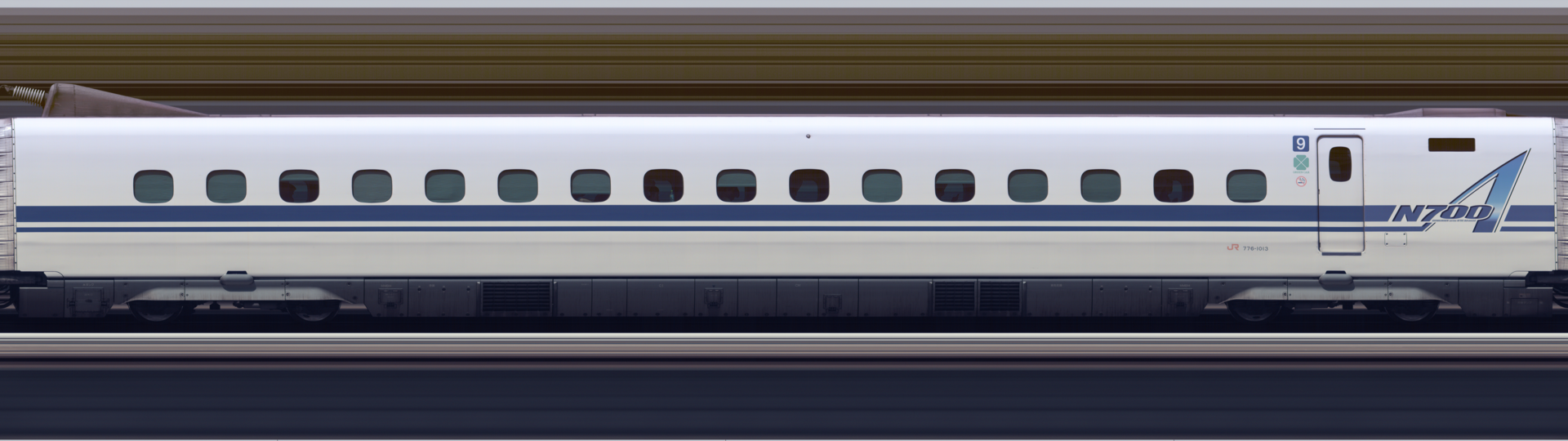
The system earned its reputation on 11 March 2011. At 14:46 JST, a magnitude 9.0–9.1 megathrust quake struck 72 km east of the Oshika Peninsula and shook for about six minutes — the largest ever recorded in Japan. The tsunami that followed reached 40.5 metres at Miyako and surged up to 10 km inland near Sendai; official figures put the dead at 19,759, with 2,553 missing, and around 90–92% of the deaths were by drowning — the water, not collapsing buildings, did the killing. But here is the story Japan tells about that day. JR East's earthquake early-warning system for the Shinkansen detected the quake's P-waves at its coastal seismic station at 14:46:38.9 — about 15 seconds after the quake began — and issued its first automatic control signal at 14:47:02.9, cutting power and triggering emergency brakes. The signal came 12 to 22 seconds before the strong shaking reached the line. Twenty-seven trains were safely brought under control, 19 of them running at the time, and no passenger-carrying Shinkansen derailed; no passengers or crew were hurt. (One empty test train did derail near Sendai, with no one aboard.) The trains had been stopped by a machine that felt the earthquake before the earthquake arrived.
Japan's lesson is not that earthquakes can be beaten — the ground will keep moving four times a day, and the next great quake is a matter of when, not if. The lesson is that a disaster's death toll is a choice made decades in advance: in a building code written in 1981, in a warning system launched in 2007, in a drill repeated every September. The plates will not negotiate. Everything else is engineering, and engineering is a decision.
Related on Poptani Labs: Why India has only one time zone — and the tea gardens that keep their own, Why Switzerland stays neutral — and what neutrality actually costs. More in this category: The World, Explained.
Sources: Japan Meteorological Agency, 'Earthquake Early Warning', NOAA, 'The 2011 Japan earthquake and tsunami', Journal of JSCE, 'Earthquake Early Warning System for Railways and Its Performance', Wikipedia, '2011 Tōhoku earthquake and tsunami', National Geographic, 'Plate Tectonics and the Ring of Fire'

