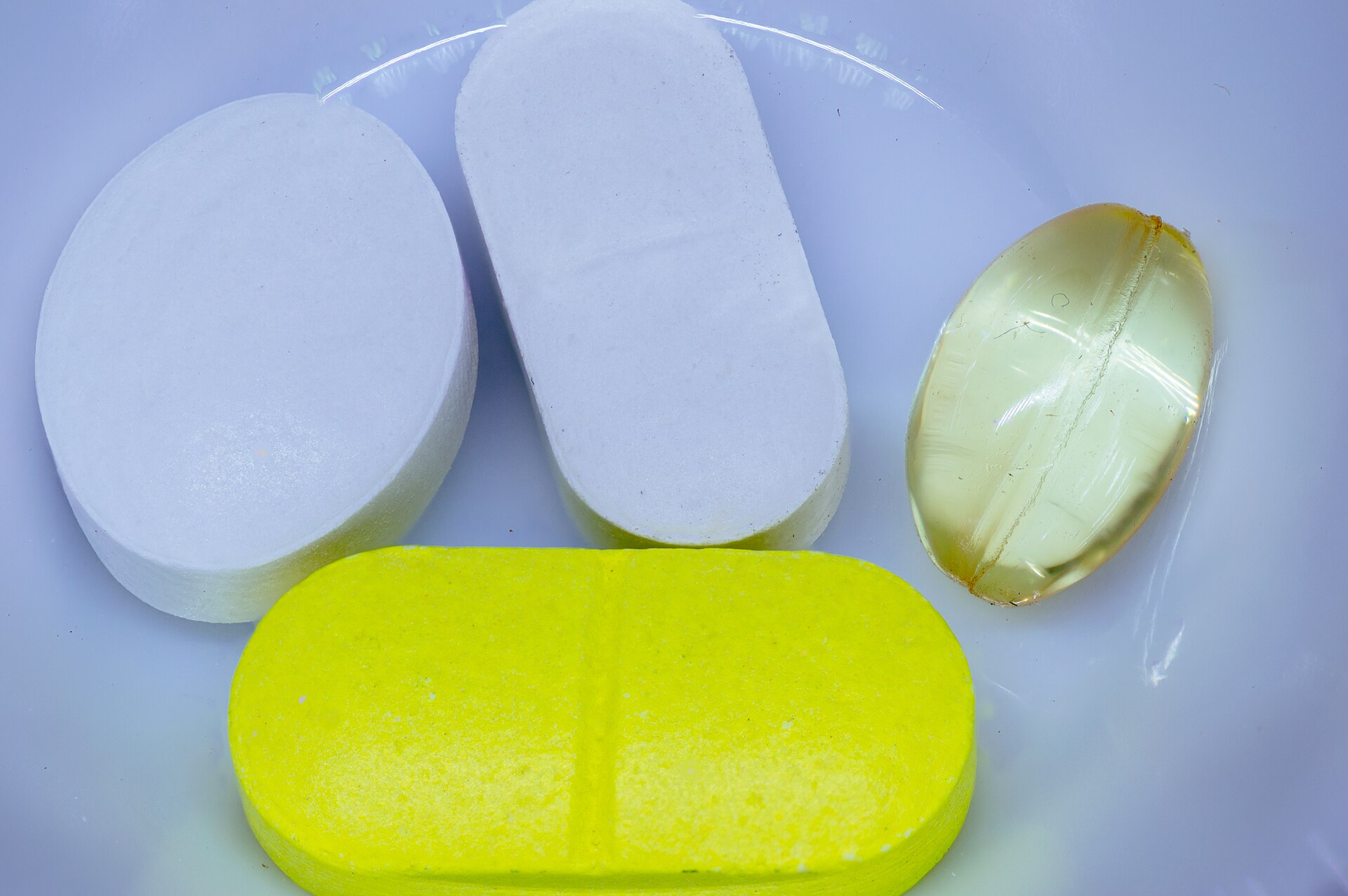
Give a patient a pill with no medicine in it, tell them it will help, and a measurable number of them get better. Their pain eases, their nausea fades, their symptoms soften — and the change is not in their imagination. The placebo effect is one of the strangest facts in medicine: belief, expectation and the ritual of treatment can produce real, physical changes in the body. This is a research-based piece — the history of the effect and what the evidence actually supports — not a medical experiment.
A placebo is an inert treatment — a sugar pill, a saline injection, a sham procedure — given as if it were real medicine. The effect is the improvement that follows, and it is not one thing. Part of it is expectation: if you believe a treatment will work, your brain starts preparing for relief before the treatment does anything. Part of it is conditioning: your body has learned, from years of taking pills that worked, to respond to the act of taking a pill. And part of it is the context — the white coat, the careful explanation, the feeling of being looked after. None of this is imaginary. Researchers have found that placebo pain relief can be blocked by drugs that switch off the brain's own opioid system — evidence that the effect runs on real chemistry, using the same pathways as morphine. Your brain, in other words, has its own pharmacy, and a sugar pill can be the key that opens it.
The modern placebo story starts with Henry K. Beecher, a Harvard anaesthetist. In 1955 he published a paper in the Journal of the American Medical Association called "The Powerful Placebo." He reviewed 15 controlled trials involving 1,082 patients and reported that placebos had an average effectiveness of 35.2% — "a degree not widely recognised," as he put it. The paper landed like a bomb: if a third of patients improve on nothing at all, then every drug trial needs a placebo group to prove the drug itself is doing anything. Beecher's argument won, and the double-blind, placebo-controlled trial became the gold standard of medicine. But the famous number deserves a caveat. A modern re-analysis of Beecher's fifteen studies, published in 1997, found that none of them convincingly demonstrated a placebo effect that couldn't be explained by something else — natural healing, patients getting better on their own, or the ups and downs of an illness. The 35.2% figure is shaky. The effect itself is real, but it is smaller and subtler than the headline number suggests — and it varies enormously by condition, working best for pain, nausea, fatigue and other symptoms the brain helps to produce.
Every telling of the placebo story includes a wartime anecdote, and it goes like this. During the Second World War, Beecher was working in a military hospital when a badly wounded soldier needed surgery and the morphine had run out. A nurse injected the soldier with salt water instead, assuring him it was a powerful painkiller. The soldier relaxed, and Beecher carried out the operation without any real anaesthetic. That, so the story goes, was the moment Beecher realised the power of the mind over the body. It is a wonderful story. It is also, very probably, untrue. McGill University's Office for Science and Society went looking for it and found no trace — not in Beecher's published papers, not in his personal archive at Harvard. The tale appears to be a corruption of a real case in which Beecher gave a wounded man a sedative instead of a painkiller, reasoning that the man's anxiety was contributing more to his pain than the wound itself. There was no morphine shortage and no salt-water injection. What is real, and documented in Beecher's 1946 paper "Pain in Men Wounded in Battle," is stranger in its own way: soldiers with terrible wounds often asked for far less morphine than civilians with similar injuries. Beecher's explanation was that the wound meant something different to a soldier — it meant going home, alive — than it did to a civilian, for whom it meant only suffering. The meaning of the injury changed how much it hurt. That observation, not the salt-water legend, is what set him on the path to the placebo.
The placebo effect is the reason drug trials have control groups — and it is also the reason your own expectations are part of your treatment, whether you want them to be or not. It has a dark twin, the nocebo effect: warn someone vividly about side effects, and some of them will develop those symptoms on a sugar pill. And in recent years researchers have found something even stranger: open-label placebos — pills patients are told are placebos — can still help in some conditions, suggesting that the ritual itself, not just the deception, does some of the work. The practical takeaway is not that medicine is fake. It is that healing was never just chemistry. The pill matters, and so does everything around the pill: what you were told, what you believe, and who is sitting beside you when you take it.
The placebo effect is a reminder that the mind is not separate from the body — it is part of the body's machinery, with its own levers and its own pharmacy. And the wartime legend is a reminder of something else: a good story can outrun the evidence, even in science. The honest version is less dramatic and more useful — expectation changes pain, meaning changes pain, and the truth is worth checking.
Related on Poptani Labs: The lemon-juice bank robber: what the Dunning-Kruger effect really says, The Baader-Meinhof phenomenon: why you suddenly see it everywhere, The Zeigarnik effect: why unfinished tasks haunt your brain. More in this category: The Human Operating System.
Sources: Knowable Magazine, How the Placebo Effect Went Mainstream, McGill Office for Science and Society, The Legend of the Wartime Placebo, Frontiers / PMC, Historical evolution of the scientific investigation of the placebo analgesic effect, The Skeptic, Rather less than more: More or Less misses the mark on placebo effects

