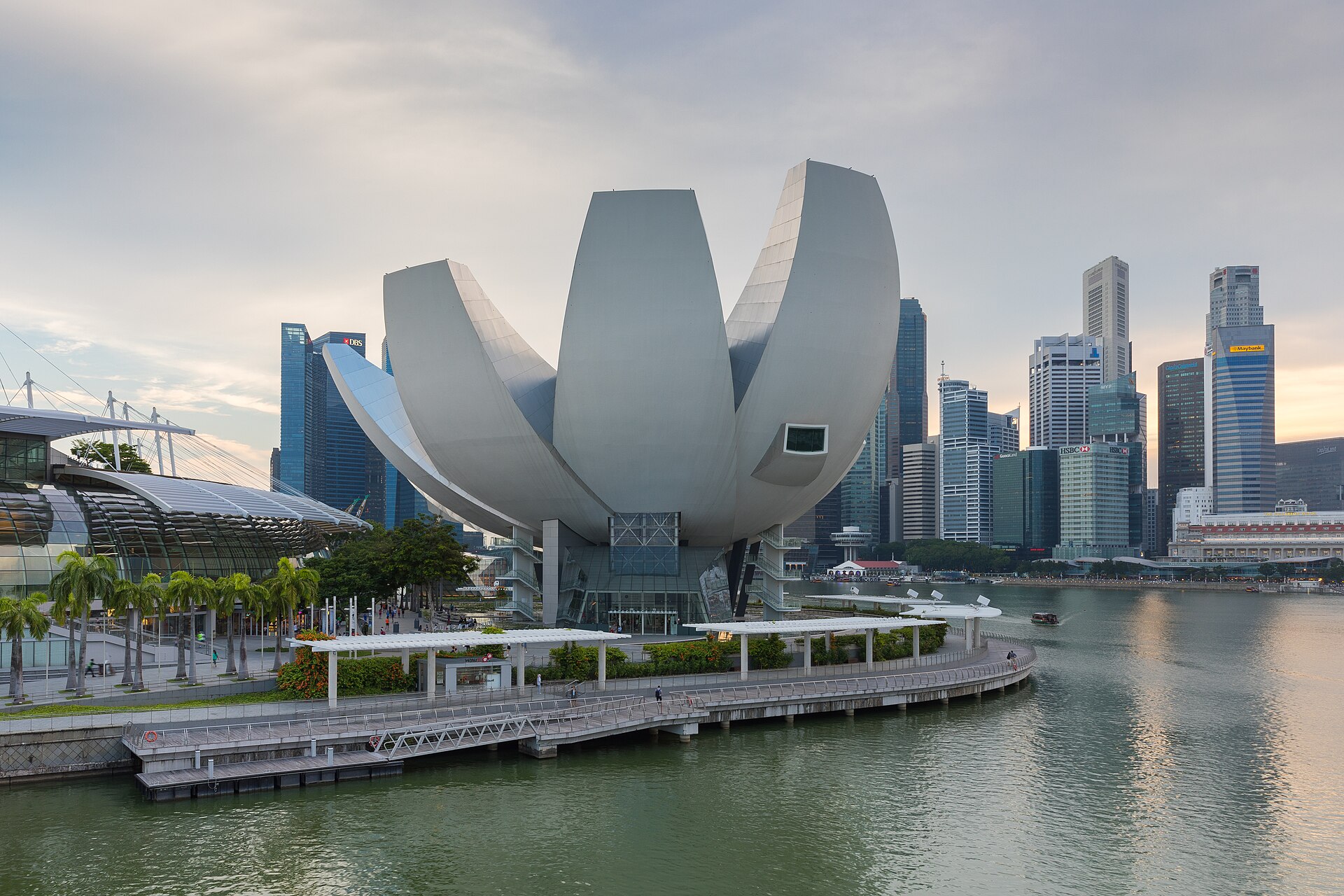
On 9 August 1965, Singapore became a country against its will. Malaysia's parliament voted 126 to 0 to expel it from the federation, and that evening Prime Minister Lee Kuan Yew went on television and wept. He was now leading about two million people with no army, no natural resources, and not even enough fresh water — the island imported it through a pipeline from the Malaysian state of Johor. Singapore is the only country in modern history to have independence forced on it. Sixty years later, its income per person is higher than America's.
The numbers in 1965 were bleak. Income per person stood at roughly US$500 a year. Unemployment was high, housing was overcrowded, and the island had almost nothing to sell: no oil, no minerals, no farmland, and a domestic market too small to matter. Its much larger neighbour, Malaysia, had land, oil, gas, timber and agriculture. By any normal logic, Singapore should have stayed poor.
Lee's answer was brutally simple: if you have nothing to sell, become useful to people who have something. Singapore would not try to be self-sufficient. It would make itself the place the world wanted to do business — and it would do it with a discipline that bordered on the obsessive.
The economic design was mostly the work of Lee's finance minister, Goh Keng Swee. In 1961 he created the Economic Development Board with US$100 million and a single mandate: bring in foreign companies. His first project was Jurong Industrial Estate — nine thousand acres of western-coast swampland, drained and levelled for factories. Shell built Singapore's first oil refinery there in 1961, and Texas Instruments, Hewlett-Packard and General Electric followed. By 1976, Jurong held 650 factories.
Geography did the rest of the selling. Singapore sits at the southern tip of the Malay Peninsula, where the Strait of Malacca funnels roughly a quarter of the world's seaborne trade through a channel barely two miles wide at its narrowest. The port grew into one of the busiest on Earth, overtaking Rotterdam by 1982. Trade chokepoints are fragile — the Panama Canal recently showed what happens when one runs dry — but Singapore's position made it indispensable. From there, Singapore kept climbing the ladder: cheap manufacturing first, then electronics and semiconductors, then finance, pharmaceuticals and advanced manufacturing. In 1968 it created the Asian Dollar Market — the first in Asia to let foreign banks open offshore units, built on the US dollar's role as the world's reserve currency. In 1974 the government created Temasek to manage state investments, and in 1981 it set up GIC to manage the foreign reserves. Together the two sovereign wealth funds now hold roughly US$1.3 trillion for a population of about six million.
The domestic side mattered just as much. The Housing Development Board built more than 650,000 public flats, moving families out of slums into planned townships. A compulsory savings scheme, the Central Provident Fund, forced workers to set money aside for housing, healthcare and retirement. Over Lee's three decades in office, unemployment fell from 13.5% to 1.7%, exports rose from US$7.4 billion to US$205 billion, and income per person climbed from about US$500 in 1965 to US$14,500 by 1991. Today it stands at roughly US$98,800, according to World Bank data — ahead of the United States.
None of this came free, and the parts other countries admire are inseparable from the parts they would never accept. Singapore's rise depended on political continuity — only four prime ministers since 1959 — and on a government willing to be unpopular in the short term: strict laws, tight control of the press, and a habit of banning first and debating later. Other Asian economies took very different paths — Japan, for instance, owes twice its GDP and nobody panics — and Singapore's model has never really been replicated, which suggests how much depended on one island, one location, and one generation of leaders who stayed in power long enough to see a thirty-year plan through. The cost of living is among the highest in the world.
That is the honest caveat to the success story. Singapore proves that a country with nothing can get rich. It does not prove that any country can do it the same way.
The clearest small picture of how Singapore governs is also its most famous. In 1983, Minister for National Development Teh Cheang Wan proposed banning chewing gum: vandals were sticking it in mailboxes, keyholes and on lift buttons in public housing, and the Housing Development Board was spending about S$150,000 a year cleaning it off. Lee thought a ban was "too drastic" and said no.
Then Singapore opened its new underground railway, the Mass Rapid Transit system, in 1987 — a S$5 billion project, the largest the country had built. Vandals began sticking gum on the door sensors of MRT trains, stopping the doors from closing and forcing trains out of service. In December 1991 the government announced a total ban on the sale, import and manufacture of chewing gum, effective 3 January 1992. When a BBC reporter suggested such laws would stifle people's creativity, Lee replied: "If you can't think because you can't chew, try a banana." The ban is still largely in place today. It is a small law about a small thing — and a perfect summary of the Singapore method: find the problem, fix it completely, and do not apologise for the bluntness.
Singapore's lesson is not 'copy Singapore' — no other country has its location, its size, or its history. The lesson is narrower: a country with nothing to sell can still get rich by being useful to the rest of the world, if it plans in decades, saves compulsorily, and enforces the small rules as seriously as the big ones. The wealth is real. So is the price.
Related on Poptani Labs: Japan owes twice its GDP — and nobody panics. Here's why, Why the US dollar is so important to the world, The canal that runs on rain: how drought squeezed world trade. More in this category: The World, Explained.
Sources: World Economic Forum, 'How Lee Kuan Yew transformed Singapore', LearnOrbis, 'Is Singapore richer than the USA? How a tiny port got rich', The 1440 Review, 'The Rise of Singapore', Wikipedia, 'Chewing gum ban in Singapore'

