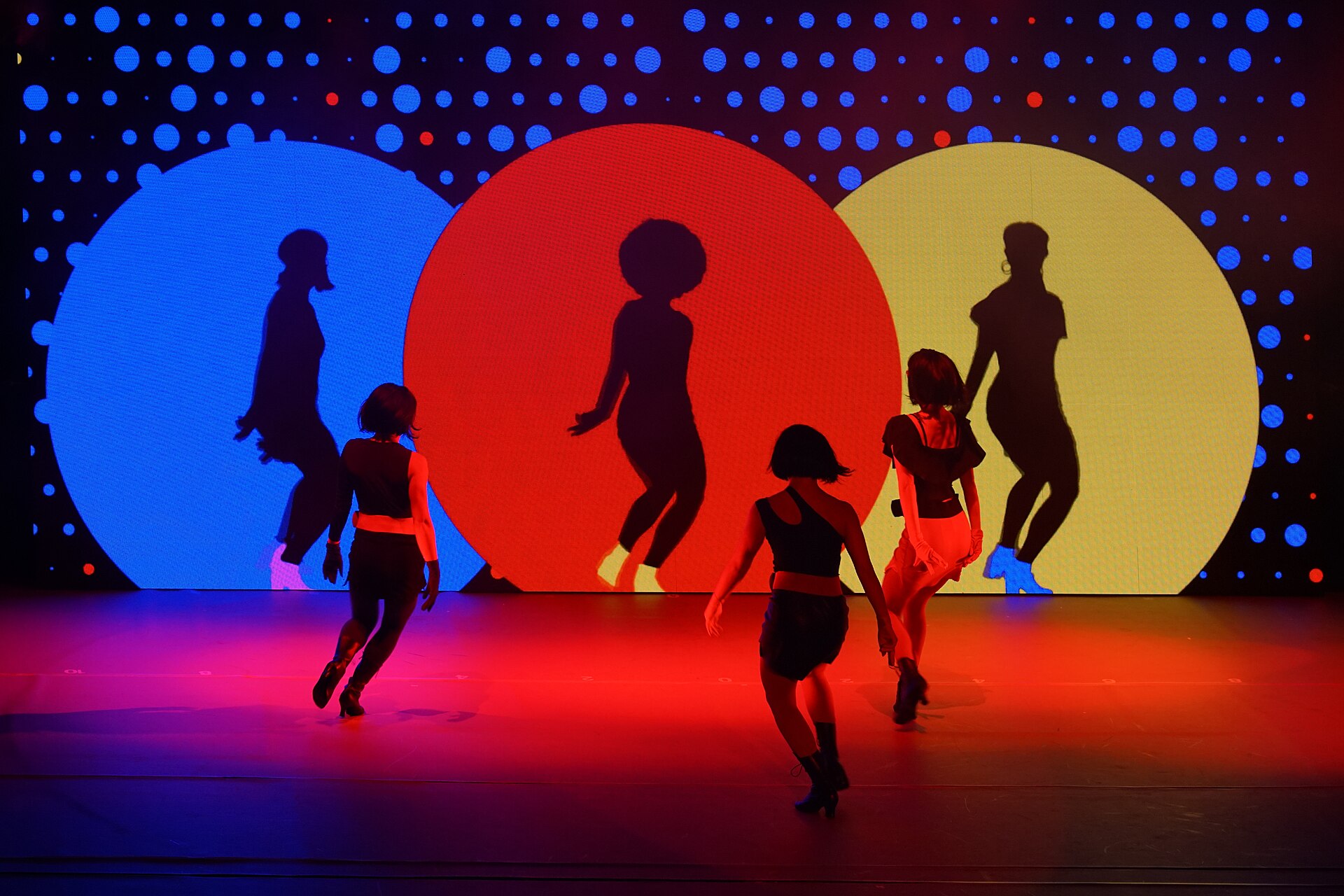
You know the replay. You walk into a meeting three minutes late and spend the next hour convinced everyone clocked it. A coffee stain on your shirt, a sentence you fumbled in a standup, a message you sent and instantly wished you could unsend — you rehearse each one as if the room is still watching. Here is the strange and freeing truth: mostly, they are not. They are busy wondering whether you noticed their stumble.
Psychologists have a name for this gap between how watched we feel and how watched we actually are: the spotlight effect. And unlike most pop-psychology ideas, it comes with a beautifully simple experiment behind it.
In 2000, Cornell psychologists Thomas Gilovich, Victoria Husted Medvec and Kenneth Savitsky published a series of studies in the Journal of Personality and Social Psychology. In the first, they asked a student to pull on a T-shirt printed with singer Barry Manilow's face — chosen, after pilot testing, because it was reliably embarrassing to a room of undergraduates — and walk into a lab where other students were already working. Then they asked the wearer to guess how many people had noticed the shirt.
The wearers guessed 46%. The real number, measured by asking each observer afterwards, was 23%. People overestimated their own visibility by about double — and that was for a huge, deliberately embarrassing face, worn by someone walking in late, about as conspicuous as an ordinary person can get. Even then, most of the room couldn't name what was on the shirt.
Source: Gilovich, Medvec & Savitsky (2000), "The spotlight effect in social judgment," Journal of Personality and Social Psychology 78(2), 211–222 — EBSCO overview, full paper (PDF)
The effect is not just about embarrassment — it is about salience, whatever its sign. In a follow-up study, participants chose a shirt they were proud to wear, picking from faces of Bob Marley, Jerry Seinfeld and Martin Luther King Jr. They overestimated how many people noticed that shirt too. And in group-discussion studies from the same paper, people overestimated how much others had noticed their contributions — the clever remarks and the clumsy ones.
In other words, you are not only exaggerating your failures. You are exaggerating your successes as well. The audience you imagine is simply bigger than the audience you have, in both directions.
Gilovich and colleagues tested a few explanations, and the one that held up is surprisingly simple: anchoring and adjustment. You start from your own vivid experience — you can feel the shirt, you are thinking about it with every step — and that becomes your starting guess for what everyone else is experiencing. Then you dial it down a bit, because obviously they are not as focused on it. But you don't dial it down nearly enough. One nice detail supports this: participants asked after a delay, once the feeling had faded a little, guessed lower than those asked straight away. The spotlight dims as your own attention moves on. The spotlight, it turns out, isn't in the room. It's behind your eyes.
Before the experiment could run, the researchers had a casting problem: they needed a face that Cornell undergraduates would reliably find embarrassing. Pilot testing settled it — Barry Manilow, and not by a little. The second problem was harder: they wanted a flattering shirt for comparison, and pilot testing found there was no single person everyone thought was cool. So they gave up on one universal choice and let each participant pick from three faces that had scored highest as desirable images: Bob Marley, Jerry Seinfeld and Martin Luther King Jr. Science, it turns out, could agree on exactly one embarrassing celebrity and zero universally cool ones.
There is a second, kinder half to this finding. Later work by Savitsky and Gilovich found that we also overestimate how harshly others judge our slip-ups — the people who did notice your stumble mostly rated it far less severely than you feared. And a sibling effect, the illusion of transparency, shows the same pattern for inner states: we think our nervousness is obvious to everyone, when observers mostly can't tell. So the chain breaks twice: fewer people notice than you think, and those who do, judge less than you fear.
Sources: FourWeekMBA overview of the spotlight effect; Savitsky & Gilovich (2003) on overestimating others' judgement, via the paper's cited follow-ups
Next time a moment replays itself in your head for the third time, try the arithmetic: halve the audience you imagine, then halve the judgement you expect from the half that remains. That is roughly the room you are actually standing in. You are the main character in your life. In everyone else's, you are an extra walking past in the background — and that is not an insult. It is permission.

