Shortly after midnight on 26 September 1983, a siren wailed inside Serpukhov-15, a Soviet command bunker near Moscow. The Oko satellite early-warning network was reporting an American intercontinental ballistic missile heading for the Soviet Union — at the system's highest confidence level. Then the screens lit up again: four more missiles, all inbound. Five warheads on their way, and the duty officer had minutes to decide whether the world should end.
The duty officer was Lieutenant Colonel Stanislav Petrov, an engineer with the Soviet Air Defence Forces. His job that night was simple on paper: report the alert up the chain of command. Soviet doctrine — launch on warning — would take it from there, with a full retaliatory strike as the intended answer. Petrov decided the machine was wrong.
Petrov's scepticism arrived on the most dangerous night the Cold War had produced in years. Three weeks earlier, on 1 September 1983, the Soviets had shot down Korean Air Lines Flight 007, killing all 269 people aboard, including a US congressman. The Kremlin and the White House were barely speaking. US naval maneuvers were probing Soviet waters, Reagan had called the USSR an "evil empire", and preparations were underway for Able Archer 83, a ten-day NATO exercise that autumn built around a simulated DEFCON 1 nuclear alert — something some Soviet leaders feared was cover for a real first strike.
In other words, Moscow was primed to believe an American attack was plausible. A duty officer who followed procedure that night would have been doing exactly what the system expected of him.
Sources: Mental Floss, Wikipedia
Petrov gave three reasons, none of which would have convinced a committee — and all of which were right. First, the count was wrong: a genuine American first strike would have meant hundreds of missiles, designed to wipe out the Soviet Union's ability to retaliate. Five was not how a real attack would look. Second, the Oko system was barely a year old and its reliability had already been questioned — he never fully trusted it. Third, the Soviet ground radar network, which he considered the more reliable instrument, showed nothing.
He was not calm about it. He later told the BBC he was only about 50:50 sure it was a glitch. But he classified the warning as a false alarm and told his superiors the system was malfunctioning rather than reporting an attack. Minutes passed. No missiles arrived.
Sources: Wikipedia, National Security Journal
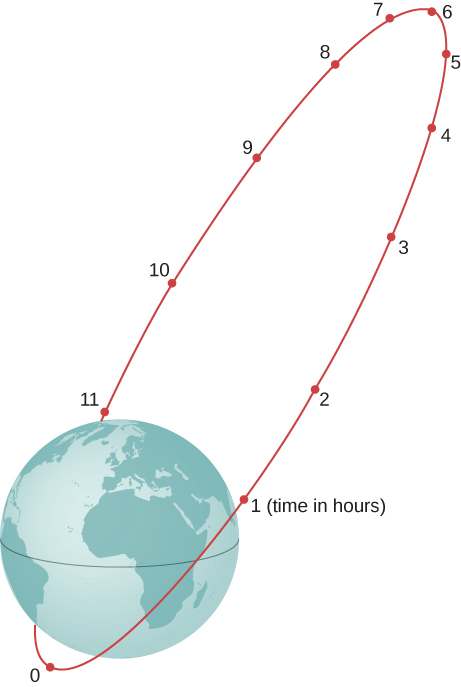
The investigation that followed found the culprit was not enemy action and not quite a computer bug — it was geometry and sunlight. The Oko satellites rode highly elliptical Molniya orbits (the kind shown in the diagram above), and that night a rare alignment occurred: sunlight reflecting off high-altitude cloud tops near Montana landed at exactly the angle the infrared sensors expected from a missile exhaust plume. The system had simply never seen this atmospheric pattern before, and its designers had never tested for it.
Petrov's own description is the one that sticks. "It was as though a child had been playing with a vanity mirror, throwing around the Sun's reflection," he told TIME. "And by chance that blinding light landed right in the center of the system's eye."
Sources: All That's Interesting, Echoes of History Past
There was no parade. The incident was classified, and the billion-ruble system's humiliation stayed buried until 1998, when a retired general mentioned it in a memoir. Petrov's reward for possibly saving millions of lives was a reprimand: investigators chastised him for not properly logging every moment of the night. When they asked why he hadn't written it all down, he said: "Because I had a phone in one hand and the intercom in the other, and I don't have a third hand." He was denied a promotion, reassigned, and retired early.
The recognition came later — and only from outside Russia. The World Citizen Award in 2004, an honour at the United Nations in 2006, the Dresden Peace Prize in 2013, and the 2014 documentary The Man Who Saved the World. Through it all, Petrov shrugged off the hero label: "I was just doing my job," he said, "and they were lucky it was me on shift that night" — which was literally true; he was only filling in for a colleague.
Sources: All That's Interesting, National Security Journal
The Petrov incident is sometimes told as a story about heroism. It's better told as a story about certainty. The machine was at its highest confidence level, and it was completely wrong. The human, who was only 50:50, was right — because he asked whether the evidence matched the theory, instead of asking whether the procedure had been followed. Every automated system built since — from missile warnings to trading desks to self-driving cars — keeps rediscovering the same lesson: the most dangerous sentence in engineering is "the computer is certain." Petrov's night is what happens when someone refuses to finish that sentence.

