In 1936, a 24-year-old mathematician at Cambridge published a paper that invented the computer — eleven years before the first one was built. In the Second World War he broke the code that was strangling Britain's Atlantic lifeline. And in 1952, the country he had helped save prosecuted him for being homosexual, and gave him a choice between prison and chemical castration. Alan Turing's life is the brightest and darkest story in the history of computing, and it is worth telling in full.
Turing's 1936 paper, "On Computable Numbers, with an Application to the Entscheidungsproblem", asked a deceptively simple question: what does it mean for something to be computable? His answer was a thought experiment — a hypothetical machine that read and wrote symbols on an endless tape, following a table of rules. The "Turing machine" could simulate any algorithm, which meant that a single machine, given the right instructions, could do the work of any machine at all. It was the first model of the general-purpose computer, and it arrived before any computer existed. He was 24 years old, and he had, almost as a side effect, drawn the blueprint for the next century.
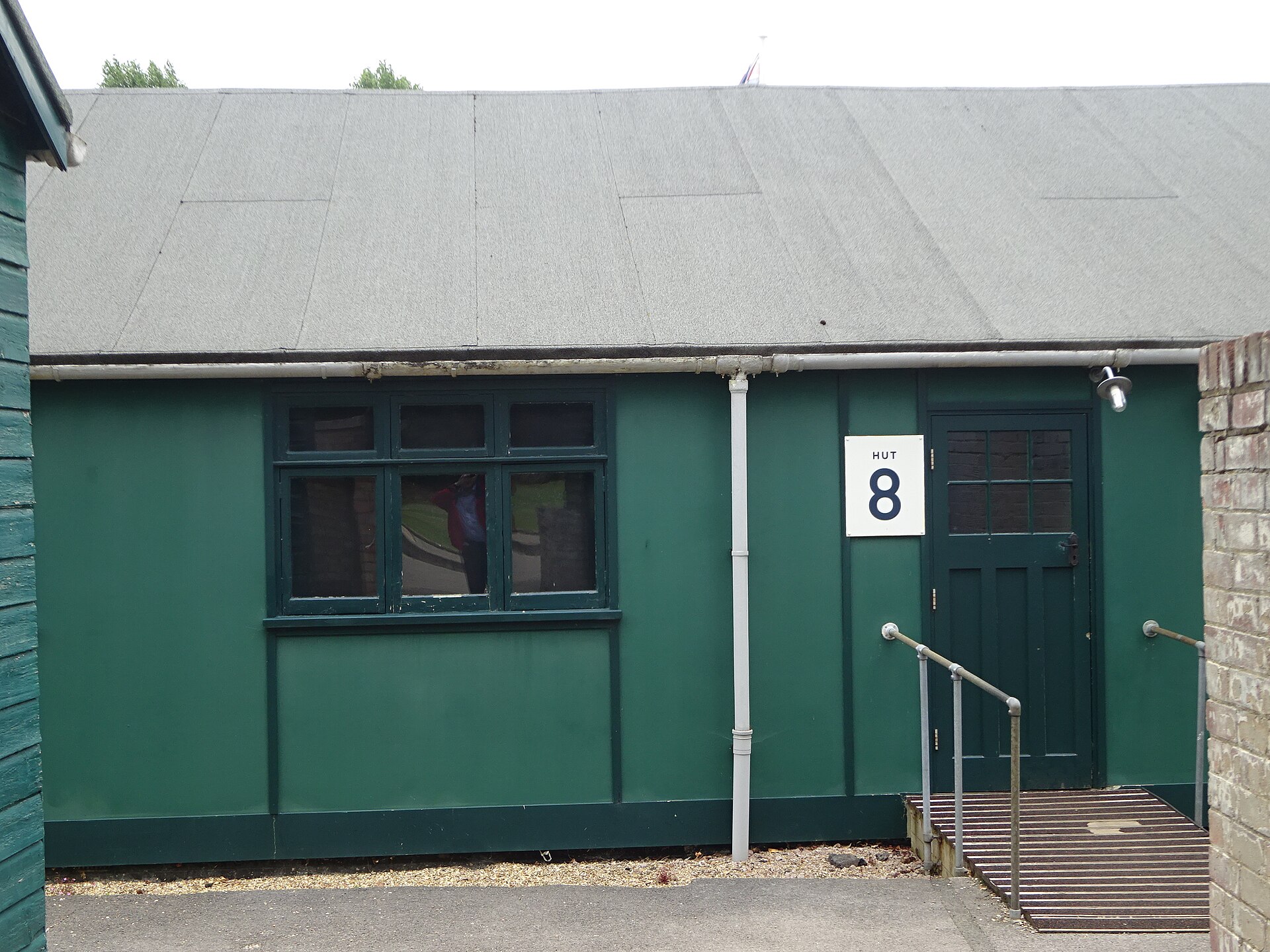
On September 4, 1939, the day after Britain declared war on Germany, Turing reported to Bletchley Park, the government's codebreaking centre. He led Hut 8, the section responsible for German naval codes, and his target was Enigma — the machine the German navy used to encrypt its messages. Building on the pre-war work of Polish cryptanalysts, Turing designed the bombe, an electromechanical machine that could test Enigma settings at speed and find the day's key. The intelligence it produced, codenamed Ultra, was decisive in the Battle of the Atlantic, where German U-boats were sinking the ships that kept Britain fed and fuelled. The codebreaking at Bletchley Park is often credited with shortening the war by as much as two years. Turing was awarded the OBE in 1945. His work stayed secret until the 1970s, and the full story was not public until the 1990s.
After the war, Turing turned to the question that now defines his legacy. In 1950 he published "Computing Machinery and Intelligence", which proposed the imitation game: if a machine could converse in a way that a human judge could not distinguish from a person, on what grounds would we deny it thought? The test that bears his name is still argued over today — and it is still the starting point for almost every debate about artificial intelligence. The same year he designed Turochamp, the first computer chess program, and in 1951 he was elected a Fellow of the Royal Society. He was 38, at the height of his powers, and about to be destroyed by his own country.
In 1952, Turing reported a burglary at his home. In the course of the investigation, the police learned that he was in a relationship with a man. Homosexuality was a crime in Britain, and Turing was convicted of gross indecency. He was offered a choice: prison, or probation on condition of hormone treatment — chemical castration. He chose the treatment. He lost his security clearance and his codebreaking work. On June 7, 1954, he was found dead at home, aged 41, from cyanide poisoning; a half-eaten apple was found beside his bed. The inquest recorded suicide, though the circumstances have been disputed ever since. It took Britain more than half a century to say sorry: a royal pardon came in 2013, and the "Alan Turing law" of 2017 pardoned thousands of other men convicted under the same laws. His face now appears on the £50 note.
Turing's colleagues at Bletchley Park remembered him as "Prof" — brilliant, scruffy, and gloriously eccentric. Every June he suffered a bad attack of hay fever, and he cycled to the office wearing a service gas mask to keep the pollen off. His bicycle had a fault: the chain came off at regular intervals. Instead of having it mended, he counted the number of times the pedals went round and got off in time to adjust the chain by hand. And he chained his own mug to the radiator pipes, to stop anyone borrowing it. These details come from the official History of Hut Eight, written by his colleague A. P. Mahon in 1945 — the small, stubborn habits of a man who solved problems by refusing to accept them, whether the problem was a U-boat code or a bicycle chain.
Turing's idea was that a machine could be universal — that one device, given the right instructions, could become any device. Everything you are reading this on is his idea, made real. The tragedy is that the country that benefited most from his mind punished him for who he was, and only apologised when it was far too late. The £50 note is a nice gesture. The real memorial is the one he designed himself, in 1936, at 24: the idea that thinking is something a machine can be taught to do — and that the people who teach it matter more than the machine.
Related on Poptani Labs: Feynman's glass of ice water: the 30-second demo that explained a disaster, Marie Curie: the notebooks too radioactive to touch, Carl Sagan and the pale blue dot: the photo that shrank the world. More in this category: Big Thinkers.
Sources: Wikipedia, Alan Turing, History of Data Science, Alan Turing, History Hit, 10 facts about Enigma codebreaker Alan Turing

