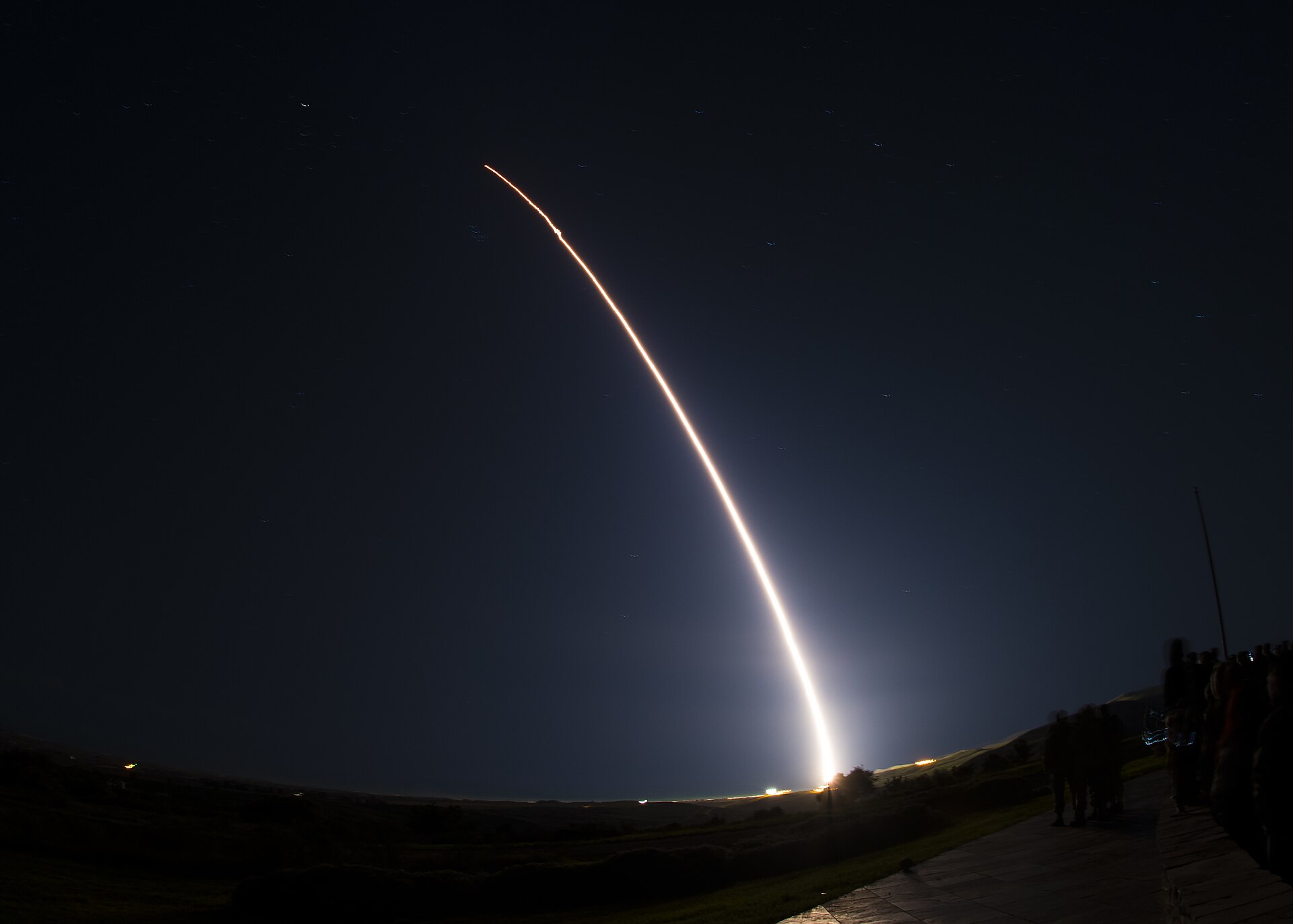
Just after midnight on 26 September 1983, at a secret Soviet military facility called Serpukhov-15, a computer screen lit up with a warning: an American intercontinental ballistic missile had been launched at the Soviet Union. Then the system reported four more. Lieutenant Colonel Stanislav Petrov, the duty officer watching the Oko early-warning satellites, had minutes to decide whether to pass the warning up the chain of command — the step that could have triggered a retaliatory nuclear strike. He decided not to. This is a research-based retelling, drawn from the historical record and Petrov's own later interviews — not a dramatisation, and the judgement calls in it are his, as he described them.
The timing could hardly have been worse. Three weeks earlier, on 1 September 1983, the Soviet military had shot down Korean Air Lines Flight 007, killing all 269 people aboard, and the Cold War was at one of its tensest points in decades. The Oko system was new — a network of satellites with infrared sensors designed to spot the heat of launching missiles — and Petrov was the officer on duty at its command centre. At about 00:15 local time the system reported a launch from the United States, then four more behind it. His orders were clear: report the warning upward, and the Soviet leadership would decide whether to launch a retaliatory strike. Petrov did not report it. He waited for corroborating evidence from ground-based radar — and none arrived. Within minutes, the warnings disappeared from the screens. No missiles were coming.
Petrov's decision was not a hunch; it was reasoning under pressure. He had been told that an American first strike would be all-out — hundreds of missiles, not five. As he put it later, "no one starts a nuclear war with only five missiles." He also knew the Oko system was new and, in his view, not yet wholly trustworthy — it had reported false alarms before. And the ground radar, which should have picked up incoming missiles within minutes, showed nothing at all. Later investigation confirmed he was right: the false alarm had been caused by a rare alignment of sunlight on high-altitude clouds above North Dakota and the satellites' Molniya orbits, which the infrared sensors misread as missile plumes. The error was later corrected by cross-referencing a geostationary satellite. The system had done exactly what it was built to do — detect a launch signature. It had simply detected one that was not there.
Here is the fun anecdote — the detail that makes the story stranger than any film version of it. There is a famous image of Cold War command centres: a red button, waiting for one person to press it. According to Petrov, that button was never made operational. Military psychologists, he said, did not want to put the decision to start a nuclear war into the hands of a single person. The system was designed so that no one individual could launch a retaliatory strike alone — and in 2006, the Russian mission to the United Nations made the same point officially, arguing that nuclear retaliation required multiple sources to confirm an attack, so a single person could not have started or prevented a nuclear war. Historians still argue about how close the world came that night, and the honest answer is that nobody knows exactly what the Soviet leadership would have done with a report they never received. But the decision that mattered was made by a man who trusted his own reasoning over a machine that was screaming at him — and who, as he later said, simply had "a funny feeling in my gut" and decided not to make a mistake.
Almost nothing — at first. Petrov was neither rewarded nor punished for his actions; the incident was kept secret for years, and he was questioned about why he had not logged the event properly. The world only learned his name in the 1990s, after the Cold War ended. In 2004, the Association of World Citizens gave him its World Citizen Award, with a trophy and $1,000. In 2013 he received the Dresden Prize in Germany, and a documentary about him, The Man Who Saved the World, came out in 2014. He died in 2017, aged 77. He never claimed to be a hero. In a 2004 interview he said, simply, "I was simply doing my job." The job, as it turned out, was to be the one person in the chain who asked whether the machine could be wrong — on the one night when it was.
Petrov's night is the butterfly effect in its purest form: a trick of sunlight on a cloud, a new satellite system, one tired officer — and the difference between a quiet night and a war nobody wanted. The lesson is not that machines are unreliable, or that heroes save the world. It is that every system, however sophisticated, has a moment when a human has to decide whether to believe it. Petrov decided not to — and then went back to his job, in silence, for another decade before anyone thanked him.
Related on Poptani Labs: The wrong turn that started a world war: Sarajevo, 28 June 1914, The 2010 Flash Crash: how $1 trillion vanished in 36 minutes, The missing hyphen that blew up a rocket to Venus. More in this category: The Butterfly Effect.
Sources: 1983 Soviet nuclear false alarm incident (Wikipedia), How one man's split-second decision in 1983 saved humanity from nuclear annihilation (History Skills), Stanislav Petrov: the unsung hero who saved the world from nuclear annihilation (History Tools)

