Stoicism is having a second life. A philosophy born in Athens around 300 BCE now fills modern bookshelves, boardrooms, and therapy rooms. Its appeal is simple: it does not promise a better world, only a steadier way to live in this one — by drawing one sharp line between what is yours to decide and what is not.
The school takes its name from the Stoa Poikilê, the painted colonnade in Athens where its founder, Zeno of Citium, taught. Zeno was a merchant from Cyprus who, by the traditional account, lost his fortune in a shipwreck and turned to philosophy instead. Cleanthes and Chrysippus built the system up — Chrysippus so thoroughly that an ancient saying held that without him there would have been no Porch at all. Almost none of the founders' own books survive; we know their ideas through later writers who quoted them.
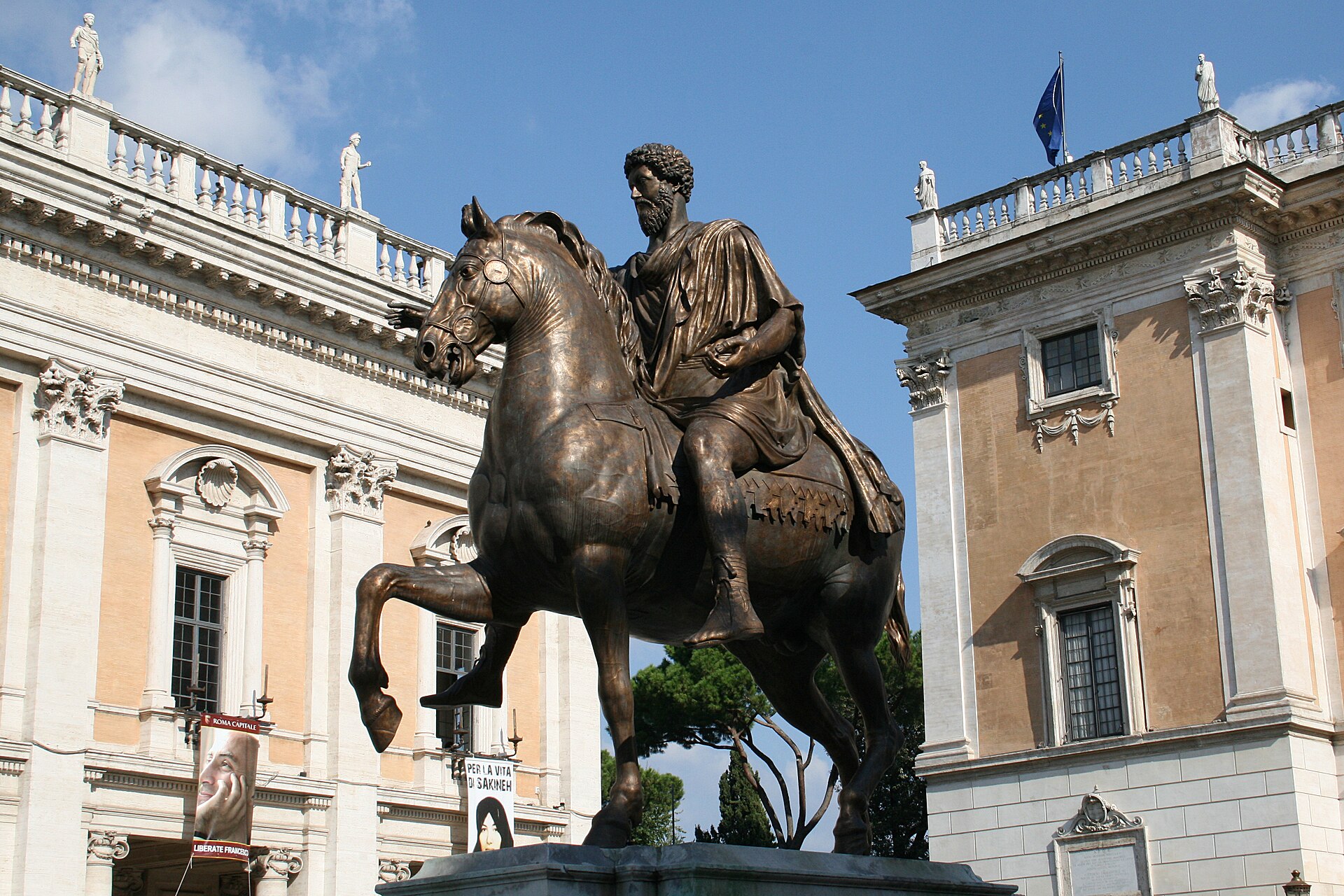
The Stoics we actually read come much later, from Rome: Seneca, a statesman and playwright who advised the emperor Nero; Epictetus, who was born enslaved and taught after gaining his freedom; and Marcus Aurelius, who ruled the Roman Empire from 161 to 180 CE while writing private notes to himself that we now know as the Meditations. Those notes were never meant for publication.
Sources: Stoicism Now, "A short history of the Stoics"
Epictetus opens his Enchiridion — literally "handbook" — with the division everything else hangs on: "Some things are up to us and others are not." Up to us, he says, are our own judgement, impulse, desire, aversion — our own actions. Not up to us are body, property, reputation, and public office.
The point is subtler than "don't worry about what you can't control." For the Stoics, only what is up to us can be truly good or bad, because only that is fully ours. Health, wealth, and reputation are "indifferents": worth preferring when you can get them, but not things your happiness should depend on. Nor is it passivity: stop staking your peace on outcomes you cannot secure, and put the same energy into judgements and actions you can.
Sources: Stoa, "The dichotomy of control, explained"
If the dichotomy is the method, virtue is the goal: the only true good is a good character, expressed through four cardinal virtues that work as a set:
Notice what is missing: no virtue of success. A Stoic can fail at a venture and still have lived well, if the decisions were wise, brave, fair, and measured.
Stoicism was a daily practice, not a theory to admire from a distance. Three of its exercises still work:
Premeditatio malorum — the premeditation of evils — means picturing, briefly and calmly, what could go wrong: the delayed flight, the difficult conversation, the rejected proposal. The aim is not pessimism. It is to meet trouble half-prepared instead of blindsided.
Seneca describes examining his day each evening: what did I do well, where did I lose my temper, what would I change? You cannot improve a reaction you never notice.
Memento mori — "remember you must die" — sounds grim, but the Stoics used it as a clarifier, not a threat. Marcus reminds himself that he, like everyone he argues with, is temporary — and petty grievances shrink.
First, it is not about suppressing emotion: Marcus grieved his children, Seneca wrote warmly to friends. The goal was never a blank face. It was to pause between an impression and your assent to it, so anger or fear did not make your decisions for you. Second, it is not an excuse to accept injustice. Justice is one of the four virtues: a Stoic is supposed to act against what is wrong, while refusing to make their inner life hostage to the result.
Nor is it a substitute for professional help: Stoic ideas can steady a difficult week, but they are a philosophy, not a treatment.
Here is the most surprising part of Stoicism's second life: modern psychotherapy is partly built on it. Albert Ellis, who developed Rational Emotive Behaviour Therapy in the 1950s, explicitly credited Epictetus as an influence; Aaron Beck's Cognitive Behavioural Therapy shares the same core insight — that distress comes less from events themselves than from our judgements about them. When a therapist helps someone challenge an automatic thought, they walk a path Epictetus mapped two thousand years earlier.
Sources: The Untangled Self, "Psychology and Stoicism"; Modern Stoicism, Chris Gill on Marcus and the dichotomy of value
You are not what happens to you. You are what you judge, choose, and do about it. Stoicism's whole wager is that this distinction — between the world and your response to it — is enough to build a life on. Zeno lost a fortune and found a philosophy. Marcus ran an empire and wrote himself reminders to stay decent. Start with the next small thing that goes wrong today, and ask: is this up to me? If it is, act well. If not, let it pass.
Related on Poptani Labs: Did a mushroom make us human? Terence McKenna's "stoned ape" idea, Nobody noticed: the spotlight effect, and why embarrassment lies to you, Neil deGrasse Tyson and the cosmic perspective. More in this category: Big Thinkers.

