You know the film is terrible. You checked your watch twice in the first half hour. And yet you stay until the credits, because you have already paid for the ticket and sat through forty minutes of it. Congratulations: you have just met the sunk-cost fallacy. It is the tendency to keep investing in something — money, time, effort — because of what you have already spent on it, even though the money already spent is gone either way. The original researchers put it even more bluntly. In their 1985 paper, Hal Arkes and Catherine Blumer wrote: "We suspect that many bad movies are seen to their completion simply because once the viewer realizes how poor the movie is, several minutes and dollars have already been invested." The bad movie is not just an example. It is where the science started.
Arkes and Blumer did not just theorise; they ran the numbers on real people. In one experiment, participants were told a company had already spent $10 million of a $10 million budget on a radar-invisible plane — 90% complete — when a rival launched a faster, cheaper one. Asked whether to spend the final $1 million to finish it, 41 of 48 people (85%) said yes. Told the exact same facts as a fresh proposal, with nothing spent yet, only 10 of 60 (17%) said yes. The plane was identical; only the history changed. In another experiment, people chose between a $100 ski trip to Michigan and a $50 trip to Wisconsin they expected to enjoy more — same weekend, neither refundable. Only 46% picked the trip they would enjoy more; the bigger price tag pulled the rest to Michigan. And in a real-money field study, season-ticket buyers at an Ohio theatre who had paid full price ($15) used significantly more of their tickets than those who had paid $13 or $8 — the effect lasted about six months. Paying more made people consume more, not because they liked the shows more, but because they had paid more.
Arkes and Blumer's explanation has two parts. The first is embarrassment: to stop investing would be to admit the earlier money was wasted, and nobody wants to feel wasteful — least of all in front of others. The second comes from prospect theory: once you are already in the red, further losses sting less and possible gains loom larger, so you gamble on. Remarkably, training in economics did not reduce the effect. The same pattern shows up everywhere once you look for it. Business students playing executives poured more money into a failing division than a successful one — and even more when they themselves had made the original decision, in Barry Staw's classic 1976 study of escalation of commitment. Basketball coaches gave more playing time to highly paid players even after adjusting for performance. Entrepreneurs who start a business are more likely to throw good money after bad than those who buy an existing one. Quitting feels like losing; continuing feels like patience. Usually it is the other way round.
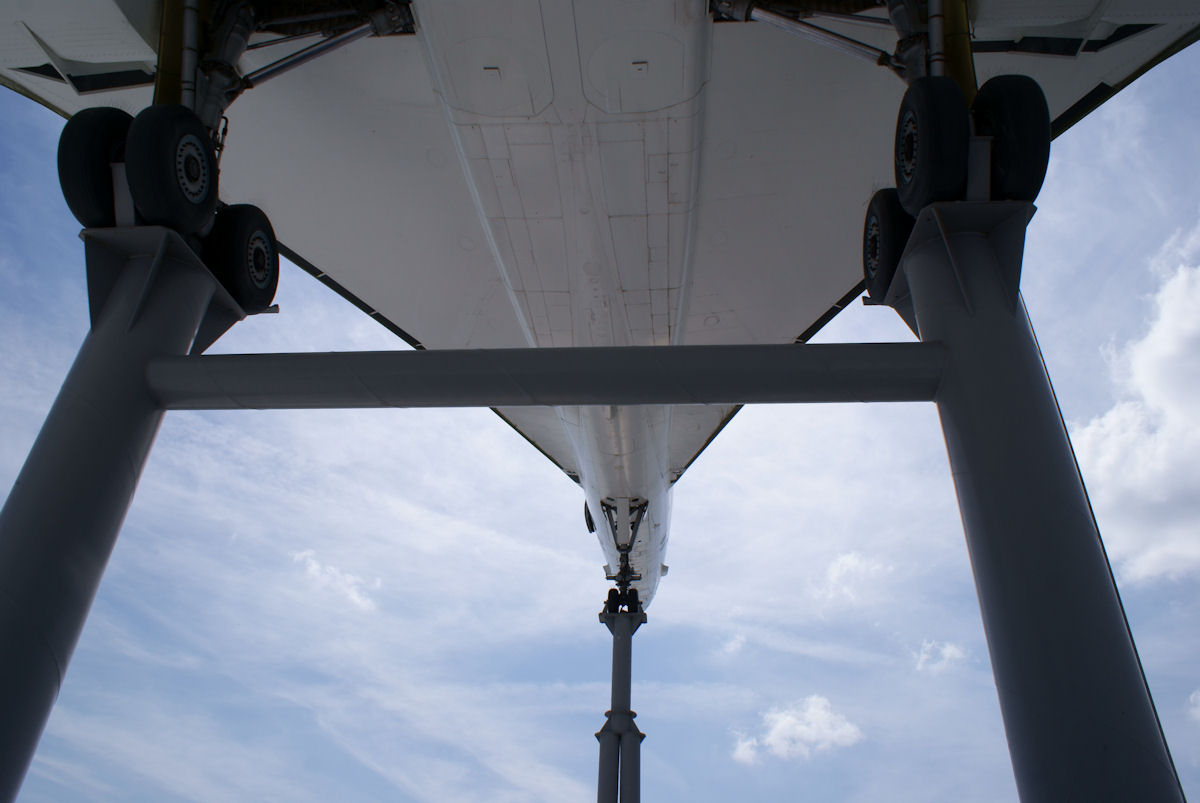
Nowhere is the pattern clearer than in the story that named it. In November 1962, Britain and France signed a treaty to build Concorde, a supersonic airliner, at an estimated development cost of £150–170 million. By 1969 the estimate was £730 million; by 1970, £825 million; by March 1974, £1,070 million — and the minister told Parliament that none of these development costs would be recovered. The final bill came to £1,126 million. The market had collapsed along the way: at first flight, Concorde held 74 options from 16 airlines; in the end, only British Airways and Air France took aircraft, 20 built in total. The British government privately regarded the project as a commercial disaster that should never have been started, but, as the record puts it, "political and legal issues made it impossible for either government to pull out." They kept flying it for 27 years — a genuine engineering marvel, kept alive by the reasoning that they had spent too much to stop. In 1976, the very year Concorde entered service, Richard Dawkins and Tamsin Carlisle coined the term "Concorde fallacy" for exactly this mistake: valuing a course of action by what it has already cost, instead of by what it will return.
The sunk-cost fallacy is not stupidity; it is loyalty to a past decision that no longer deserves it. The antidote is a single question, asked before you decide anything: if I were starting fresh today, with nothing invested, would I still do this? If the answer is no, the money already spent is not a reason to stay — it is the price of the lesson. Walk out of the bad movie. The ticket is gone either way; the next two hours are still yours.
Related on Poptani Labs: Why do we procrastinate even when we know better?, The placebo effect: why a sugar pill can heal — and the wartime story that probably never happened. More in this category: The Human Operating System.
Sources: Arkes & Blumer, 'The Psychology of Sunk Cost', Organizational Behavior and Human Decision Processes (1985), Dawkins & Carlisle, 'Parental investment, mate desertion and a fallacy', Nature 262 (1976), New Scientist, 'Call it quits: explaining the sunk-cost fallacy', Wikipedia, 'Concorde'

